


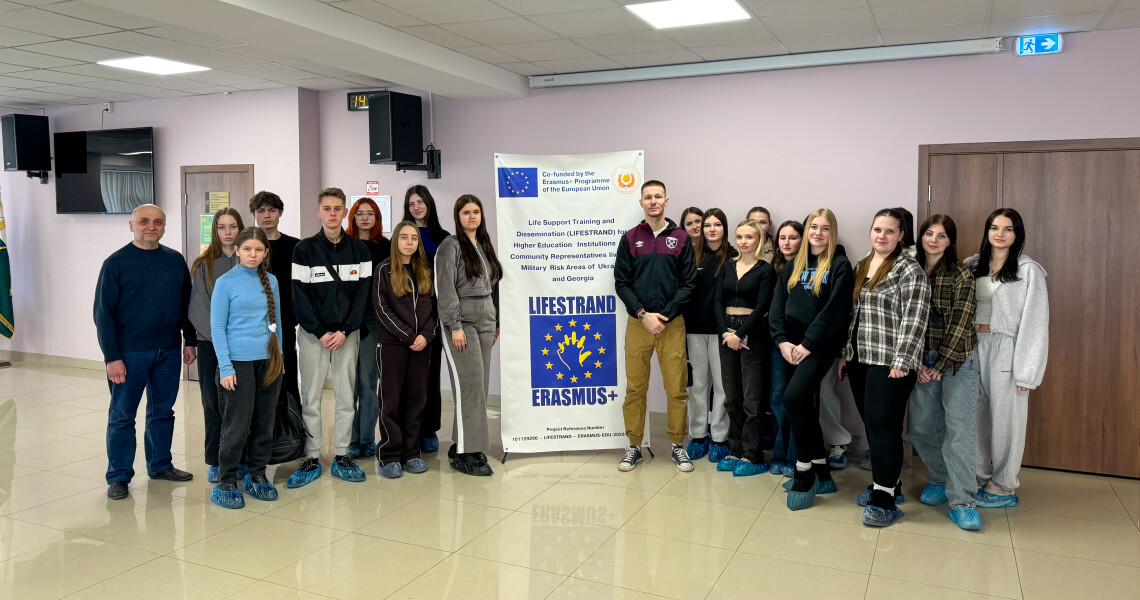
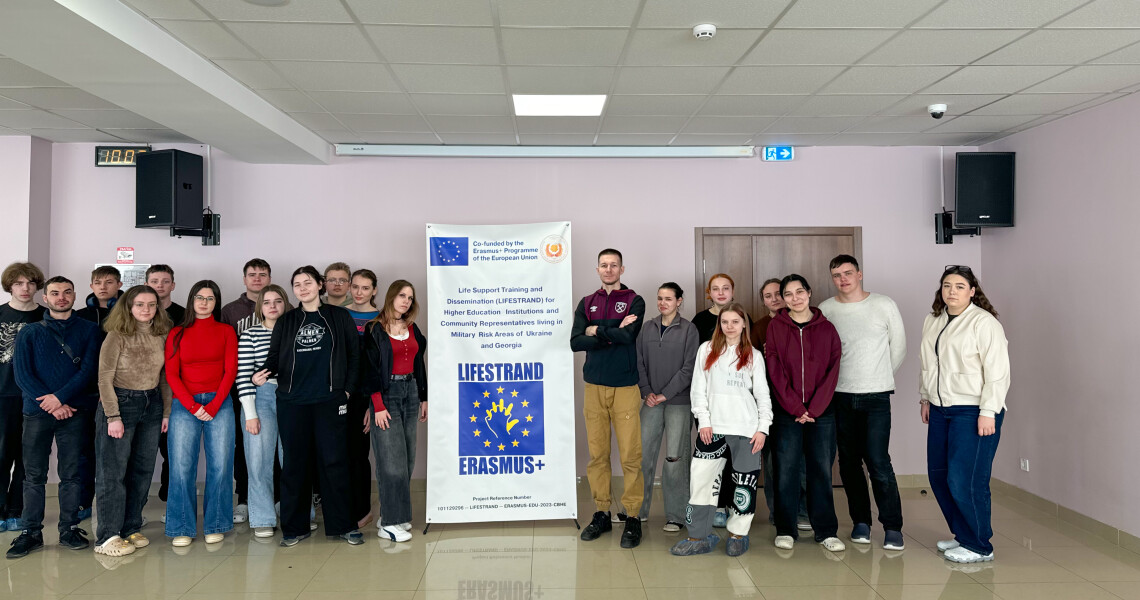
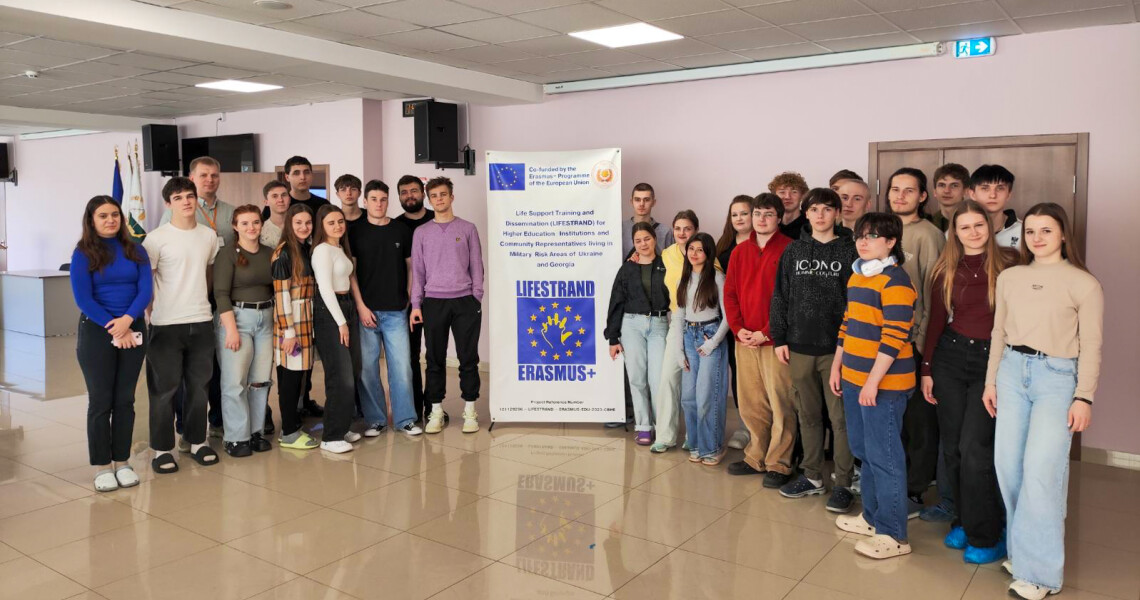
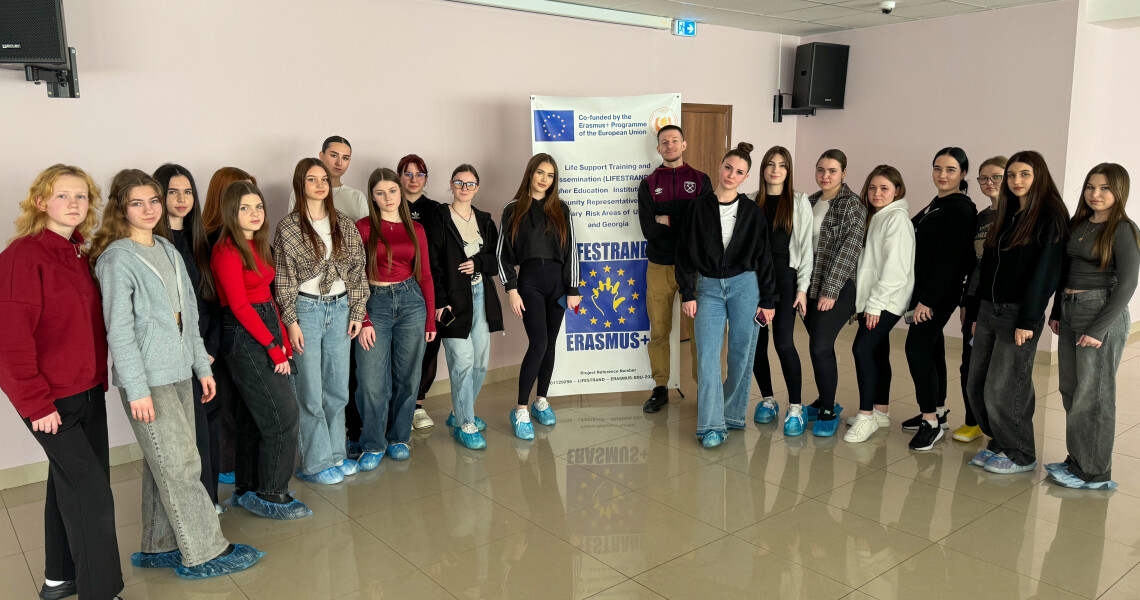
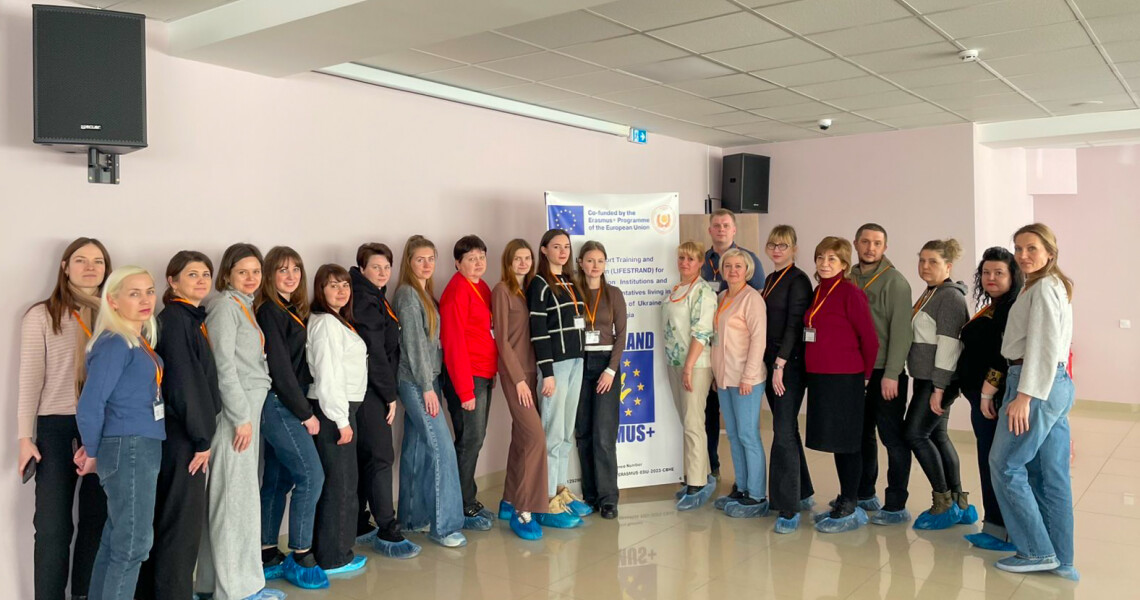
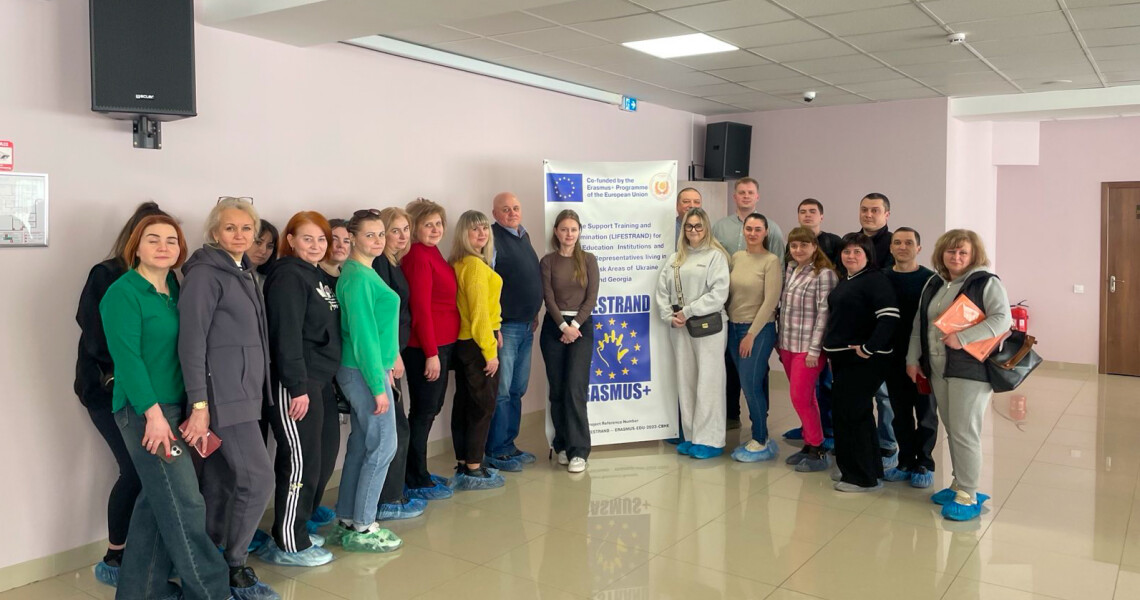
What should be done in the first minutes after an accident? How can one stay composed when a person’s life depends on the speed of decisions? These were the key questions addressed by participants of the final first aid training sessions held this spring at the Simulation Center of Poltava State Medical University (PSMU) within the LIFESTRAND project of the Erasmus+ KA2 Programme.
During the training sessions, participants did not just listen — they acted. They practiced performing basic life support, controlling critical bleeding, properly immobilizing limbs, and assisting a person when a foreign body obstructs the airway. Each exercise was designed to closely simulate real-life situations where confidence, quick response, and teamwork are essential.
Representatives of various communities joined the training: athletes from the Poltava Regional Men’s Volleyball Team – VC “Reshetylivka-PNPU”, students from the city of Poltava and the Velyka Bahachka community, as well as civil servants from the Main Department of the State Migration Service of Ukraine in Poltava Region. All of them came with the same goal — to learn how to act in a way that allows them to help when a critical moment arises.
Each group was different, yet they all shared a common motivation — the desire to be prepared to support others and, if necessary, save lives.
We sincerely thank all participants for their engagement and dedication. Special thanks go to Senior Instructor Serhii Kononenko and junior instructors Vladyslav Telehany, Volodymyr Dobrovolskyi, Alina Davydenko, Heorhii Levytskyi, and Danylo Ovcharenko for their professionalism, energy, and ability to turn training into a dynamic and highly valuable learning experience.
The LIFESTRAND project of the Erasmus+ Programme once again demonstrates that international cooperation can not only bring universities together but also foster a culture of safety, mutual support, and responsibility within the community.
Poltava State Medical University will continue to support initiatives that provide people with the most valuable asset — knowledge and skills that can save lives.